7 Amazing Secrets for the Best Traditional Moroccan Couscous with Seven Vegetables and Chicken
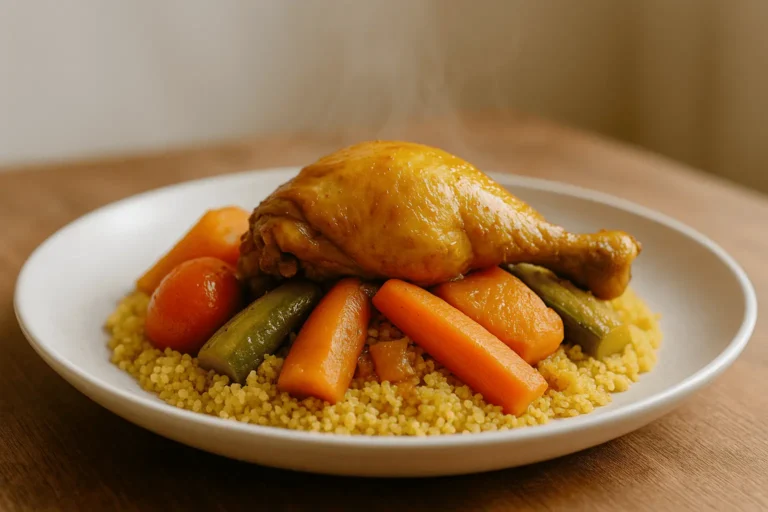
Traditional Moroccan Couscous with Seven Vegetables and Chicken is one of the most famous dishes in Moroccan cuisine. This authentic recipe combines fluffy steamed couscous, tender chicken, flavorful broth, and healthy vegetables for a comforting family meal.
Thank you for reading this post, don't forget to subscribe!Table of Contents
- What Is Traditional Moroccan Couscous with Seven Vegetables and Chicken?
- Why Moroccan Couscous Holds a Special Place in Moroccan Culture
- Essential Ingredients for Traditional Moroccan Couscous with Seven Vegetables and Chicken
- Traditional Moroccan Spices
- Kitchen Tools You Need
- Step-by-Step Traditional Moroccan Couscous Recipe
- Tips for Making the Best Moroccan Couscous
- Variations of Traditional Moroccan Couscous
- Health Benefits of Traditional Moroccan Couscous
- What to Serve with Moroccan Couscous
- How to Store and Reheat Moroccan Couscous
- Frequently Asked Questions About Traditional Moroccan Couscous with Seven Vegetables and Chicken
- Final Thoughts
Few meals can bring people together the way Traditional Moroccan Couscous with Seven Vegetables and Chicken does. The moment the rich aroma of saffron, ginger, slow-cooked vegetables, and steaming couscous fills your kitchen, the atmosphere changes completely. You are no longer simply preparing dinner — you are creating an experience rooted in comfort, tradition, and hospitality.
In many Moroccan homes, couscous is more than food. It is the centerpiece of Friday family gatherings, celebrations, and moments shared between generations. Large platters are placed at the center of the table while family members gather around, enjoying every bite together. Each spoonful combines fluffy steamed couscous, tender chicken, flavorful broth, and perfectly cooked vegetables.
If you have never prepared authentic Moroccan couscous before, you may think the process looks intimidating. In reality, once you understand the traditional techniques, you can recreate this iconic North African dish in your own kitchen with incredible results. This guide will walk you through everything you need to know about making Traditional Moroccan Couscous with Seven Vegetables and Chicken the authentic way.
What Is Traditional Moroccan Couscous with Seven Vegetables and Chicken?
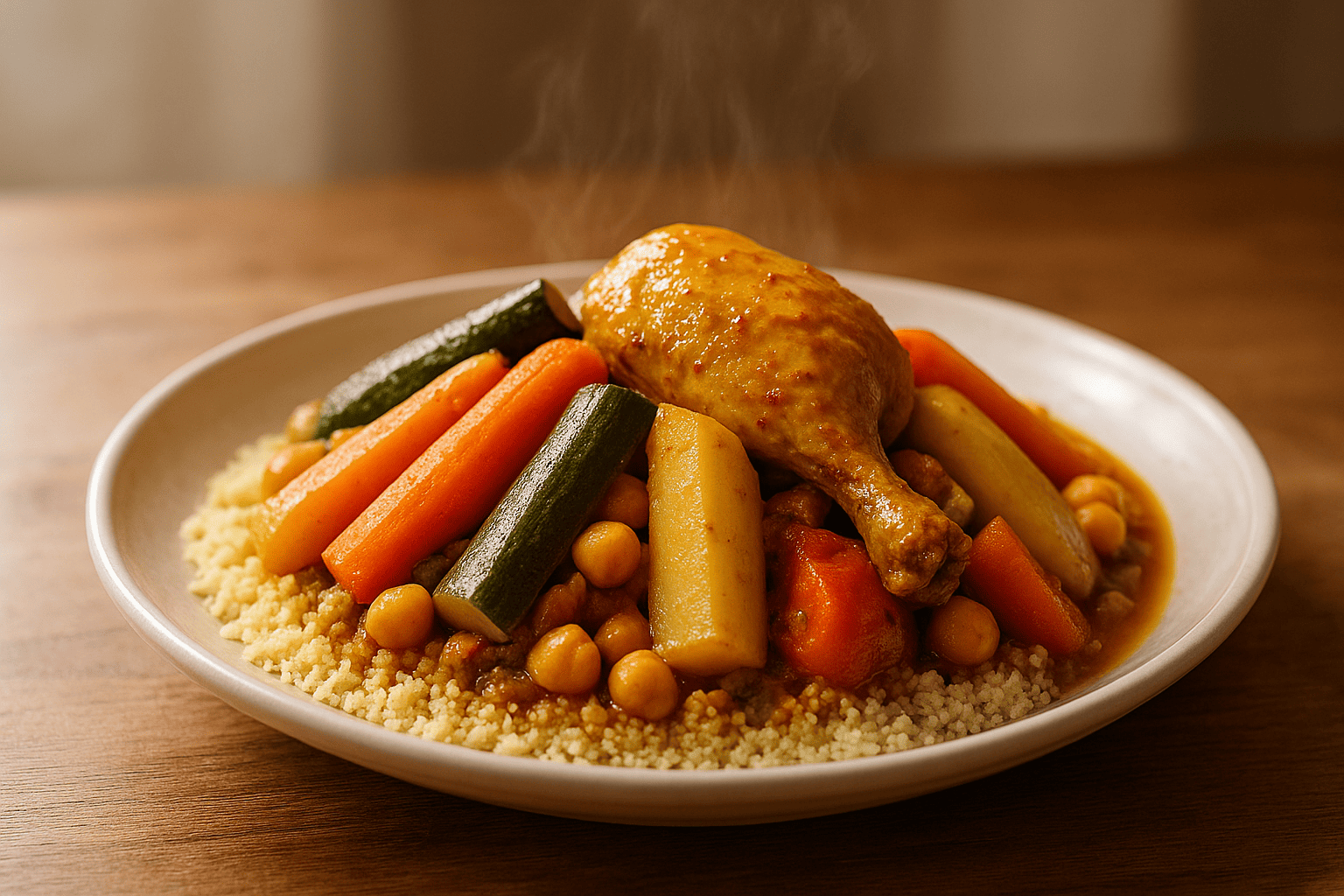
Traditional Moroccan Couscous with Seven Vegetables and Chicken is one of Morocco’s most famous and beloved dishes. It consists of fluffy steamed semolina couscous served with slow-cooked chicken, a rich aromatic broth, chickpeas, and a colorful variety of vegetables.
The dish is known for balancing textures and flavors beautifully:
- Soft steamed couscous
- Tender chicken
- Sweet and savory vegetables
- Warm Moroccan spices
- Rich broth infused with herbs and aromatics
The “seven vegetables” traditionally symbolize abundance, generosity, and nourishment. Although the exact vegetables may vary slightly depending on the season or region, the recipe usually includes carrots, zucchini, pumpkin, cabbage, turnips, onions, chickpeas, and tomatoes.
What makes Moroccan couscous unique is the steaming method. Unlike instant couscous, authentic Moroccan couscous is steamed multiple times in a special pot called a couscoussier. This process creates the light, airy texture that defines traditional couscous.
Why Moroccan Couscous Holds a Special Place in Moroccan Culture
Moroccan couscous carries deep cultural significance. For generations, families have gathered every Friday after prayer to share couscous together.
The Friday Couscous Tradition
Friday couscous is a cherished tradition throughout Morocco. The meal represents:
- Family unity
- Hospitality
- Gratitude
- Community
Many Moroccan families prepare couscous only once per week, making it something everyone looks forward to. The meal is often served on one large platter placed in the center of the table so everyone can share together.
This communal style of eating creates warmth and connection that extends far beyond the food itself.
Why Seven Vegetables Are Traditionally Used
The use of seven vegetables is not random. In Moroccan cooking, abundance and generosity are important values. A couscous platter overflowing with colorful vegetables reflects care, hospitality, and celebration.
Each vegetable also contributes a unique texture and flavor:
- Carrots add sweetness
- Turnips bring earthiness
- Pumpkin creates softness
- Zucchini balances freshness
- Cabbage adds depth
- Chickpeas provide heartiness
- Tomatoes enrich the broth
Together, they create a balanced and nourishing dish.
Essential Ingredients for Traditional Moroccan Couscous with Seven Vegetables and Chicken
Before you begin cooking, gathering quality ingredients makes a huge difference in flavor.
Main Ingredients Table
| Ingredient | Quantity | Purpose |
|---|---|---|
| Couscous | 500g | Base of the dish |
| Chicken | 1 whole chicken or pieces | Main protein |
| Carrots | 2 large | Sweetness |
| Zucchini | 2 | Texture |
| Turnips | 2 | Traditional flavor |
| Pumpkin | 300g | Soft sweetness |
| Cabbage | 1 wedge | Authentic addition |
| Chickpeas | 1 cup | Protein and texture |
| Onions | 2 large | Flavor base |
| Tomatoes | 2 | Rich broth |
| Olive Oil | 3 tbsp | Cooking base |
Traditional Moroccan Spices
Moroccan cuisine relies heavily on warm spices that create rich depth without overpowering the ingredients.
Essential Spice Blend
| Spice | Flavor |
|---|---|
| Turmeric | Earthy warmth |
| Ginger | Mild heat |
| Black Pepper | Deep savory flavor |
| Saffron | Floral aroma |
| Cinnamon | Subtle sweetness |
| Ras El Hanout | Complex spice blend |
These spices combine beautifully with vegetables and chicken to create the signature Moroccan couscous flavor.
Kitchen Tools You Need
The Couscoussier
A couscoussier is the traditional steaming pot used to prepare authentic couscous.
It has two sections:
- Bottom pot for broth and vegetables
- Top steamer for couscous
Steaming couscous instead of soaking it creates the fluffy texture Moroccan couscous is known for.
If you do not own a couscoussier, you can still make couscous using:
- A large pot with a steamer basket
- A metal colander placed above simmering broth
Step-by-Step Traditional Moroccan Couscous Recipe
Now comes the heart of the recipe — preparing the dish itself.
Step 1: Prepare the Chicken and Broth
The broth forms the soul of Moroccan couscous. Slow cooking allows the spices and vegetables to infuse deeply into the liquid.
Instructions
- Heat olive oil in a large pot.
- Add chopped onions and cook until softened.
- Stir in turmeric, ginger, pepper, saffron, and cinnamon.
- Add chicken pieces and brown lightly.
- Add tomatoes and chickpeas.
- Pour in water and simmer gently.
The broth should cook slowly to develop deep flavor.
Step 2: Prepare the Vegetables
Cut vegetables into large pieces to prevent them from falling apart during cooking.
Vegetable Preparation Tips
- Peel carrots and turnips
- Slice zucchini into thick sections
- Cut pumpkin into large cubes
- Keep cabbage wedges intact
Add vegetables gradually according to cooking time:
- Carrots and turnips first
- Pumpkin and zucchini later
- Cabbage near the end
This keeps every vegetable perfectly cooked.
Step 3: Steam the Couscous Traditionally
This step separates authentic Moroccan couscous from quick instant versions.
First Steam
- Place dry couscous in a large bowl.
- Sprinkle with water and olive oil.
- Rub grains gently between your hands.
- Transfer couscous to the steamer.
- Steam for about 20 minutes.
Second Steam
- Remove couscous and place it back into the bowl
- Sprinkle with salted water
- Fluff carefully with your hands
- Break apart any clumps
- Steam again for another 20 minutes
Third Steam
Repeat the process one final time.
This triple steaming method creates:
- Light texture
- Fluffy grains
- Better flavor absorption
Skipping these steps often results in dense or sticky couscous.
Step 4: Assemble the Couscous Platter
Presentation matters in Moroccan cuisine.
Traditional Serving Method
- Place couscous on a large serving platter.
- Shape it into a mound.
- Arrange vegetables around the edges.
- Place chicken in the center.
- Spoon broth generously over the top.
Many families serve extra broth separately so guests can add more as they eat.
Tips for Making the Best Moroccan Couscous
Even small details can improve your couscous dramatically.
Common Mistakes to Avoid
Overcooking Vegetables
Soft vegetables become mushy quickly.
Using Too Much Water
Excess liquid can ruin couscous texture.
Skipping the Steaming Process
Authentic couscous requires proper steaming.
Underseasoning the Broth
Taste frequently while cooking.
Expert Couscous Cooking Tips
Use Fresh Seasonal Vegetables
Fresh produce gives the broth natural sweetness and better texture.
Let the Broth Simmer Slowly
Rushing the broth weakens flavor development.
Fluff Couscous Gently
Never mash or compress the grains.
Add Butter Before Serving
A small amount of butter creates rich flavor and silky texture.
Final Thoughts
Traditional Moroccan Couscous with Seven Vegetables and Chicken represents everything comforting about homemade food. It combines rich broth, tender vegetables, warm spices, and fluffy couscous into one unforgettable dish that has brought families together for generations.
Although preparing couscous traditionally takes time, every step contributes to the final result. The slow simmering, careful steaming, and thoughtful seasoning create layers of flavor impossible to rush.
Once you experience authentic Moroccan couscous made properly, you understand why this dish holds such an important place in Moroccan culture.
Ready to Try Authentic Moroccan Couscous?
Gather your ingredients, take your time with the steaming process, and enjoy creating one of Morocco’s most cherished traditional recipes in your own kitchen. When you serve your first platter of Traditional Moroccan Couscous with Seven Vegetables and Chicken, you are not just serving dinner — you are sharing a piece of Moroccan heritage.